
Service Overview
Infertility & Reproductive Health in Dwarka
Infertility can be an emotional and challenging experience, but seeking the right evaluation and guidance can help you understand the possible reasons and available options. Dr. Swati Jain provides personalised infertility and reproductive health care in Dwarka, with a focus on identifying underlying concerns, supporting natural fertility where appropriate, and planning treatment according to each woman's individual needs.
Fertility can be affected by several factors, including ovulation problems, PCOS, endometriosis, fibroids, ovarian cysts, tubal conditions, age-related changes and other reproductive health concerns. In some cases, both partners may need evaluation to understand the complete picture.
What Is Infertility?
Infertility generally refers to difficulty achieving pregnancy despite regular unprotected intercourse over a period of time. It can affect women and men and may result from one or more factors.
Infertility does not always mean that pregnancy is impossible. Many couples benefit from identifying a treatable cause, improving reproductive health, or receiving appropriate fertility treatment.
A detailed consultation can help determine whether further testing or treatment is required.
When Should You Consider an Infertility Consultation?
You may consider consulting an infertility specialist in Dwarka if:
You have been trying to conceive without success
Your menstrual cycles are irregular or absent
You have PCOS or other ovulation-related concerns
You experience severe or painful periods
You have been diagnosed with endometriosis
You have fibroids or ovarian cysts
You have a history of pelvic surgery or pelvic infection
You have experienced recurrent pregnancy loss
You have concerns about declining fertility with age
You are planning pregnancy after previous fertility treatment
You want preconception or reproductive health counselling
Early evaluation can be particularly useful when there are known reproductive health concerns or when age-related fertility changes may be relevant.
Common Causes of Infertility
Infertility can have many different causes. Some women may have more than one contributing factor.
Ovulation Problems
Problems with ovulation can make conception more difficult. Irregular periods may sometimes indicate that ovulation is not occurring regularly.
Conditions such as PCOS can affect ovulation and may require individualised treatment.
PCOS and Fertility
PCOS is a common hormonal condition that can affect menstrual cycles and ovulation. However, having PCOS does not mean that pregnancy is impossible.
Treatment may focus on improving ovulation, managing associated symptoms and supporting pregnancy planning according to individual circumstances.
Endometriosis
Endometriosis can be associated with pelvic pain, ovarian endometriomas, adhesions and fertility difficulties. Depending on the condition and fertility goals, treatment may include medical management, monitoring or minimally invasive surgery.
Fibroids
Uterine fibroids can sometimes affect fertility depending on their size, number and location. Certain fibroids, particularly those affecting the uterine cavity, may require treatment.
Treatment options depend on symptoms, reproductive plans and the characteristics of the fibroids.
Ovarian Cysts and Endometriomas
Some ovarian cysts are temporary and may resolve without treatment, while others may require monitoring or intervention.
Endometriomas associated with endometriosis can also affect ovarian health and fertility. Treatment should take fertility goals into consideration.
Tubal Factors
Blocked or damaged fallopian tubes can interfere with the movement of the egg and sperm. Depending on the clinical situation, tubal evaluation may be recommended as part of infertility assessment.
Age-Related Fertility Changes
Female fertility can change with age, particularly due to changes in ovarian reserve and egg quality. If pregnancy is being planned at an older reproductive age, an early fertility consultation can help with appropriate assessment and planning.
Male-Factor Infertility
Fertility is a couple's health concern rather than only a woman's concern. Sperm count, movement and other semen parameters can affect the ability to conceive.
Depending on the situation, evaluation of both partners may be recommended.
Infertility Evaluation in Dwarka
A fertility consultation begins with understanding your medical and reproductive history.
The evaluation may include:
Menstrual and ovulation history
Previous pregnancies and pregnancy outcomes
Previous surgeries or pelvic infections
Medical and hormonal history
PCOS or endometriosis assessment
Pelvic examination when appropriate
Ultrasound evaluation
Assessment of the uterus and ovaries
Ovulation-related investigations
Ovarian reserve assessment when clinically appropriate
Tubal evaluation when indicated
Partner evaluation where appropriate
Not every woman needs every test. Investigations are generally selected according to symptoms, age, medical history and fertility goals.
Fertility Treatment Options
Infertility treatment depends on the underlying cause and may range from simple medical management to specialised fertility treatment.
Lifestyle and Medical Management
For some women, improving overall health, managing underlying conditions and regulating ovulation may be an important part of fertility care.
Ovulation Management
Women with irregular or absent ovulation may benefit from treatment designed to support ovulation, depending on the cause.
Treatment of Underlying Gynaecological Conditions
Conditions such as PCOS, endometriosis, fibroids, ovarian cysts and uterine cavity abnormalities may sometimes affect fertility.
Treating the underlying condition may be considered when it is likely to improve symptoms, reproductive health or fertility outcomes.
Hysteroscopic Procedures
Hysteroscopy allows the inside of the uterus to be examined and, when required, certain conditions such as uterine polyps, selected submucosal fibroids or adhesions can be treated.
Laparoscopic Surgery
Laparoscopy may be considered for selected conditions such as endometriosis, ovarian endometriomas, certain ovarian cysts, pelvic adhesions or other pelvic abnormalities.
When surgery is considered, the approach should take the woman's fertility goals and ovarian or uterine health into account.
Assisted Reproductive Treatment
Some couples may require advanced fertility treatment such as assisted reproductive techniques. When appropriate, patients may be guided or referred to a suitable fertility centre for further management.
Fertility-Preserving Gynaecological Care
When a woman wants to preserve her future fertility, treatment planning should consider the potential impact on the uterus and ovaries.
Where clinically appropriate, minimally invasive and fertility-preserving approaches may be considered for conditions such as:
Fibroids
Ovarian cysts
Endometriosis
Endometriomas
Uterine polyps
Pelvic adhesions
The appropriate treatment depends on the condition, severity, age, ovarian reserve, reproductive plans and other individual factors.
Infertility and PCOS
PCOS is one of the common conditions associated with ovulation problems. However, PCOS does not automatically mean infertility.
Fertility care may include menstrual-cycle assessment, ovulation management, lifestyle guidance and pregnancy planning. The treatment approach depends on the woman's symptoms and reproductive goals.
Endometriosis and Fertility
Endometriosis may affect fertility through inflammation, pelvic adhesions, ovarian endometriomas or changes in pelvic anatomy.
Women with endometriosis who are planning pregnancy may benefit from discussing fertility goals early. Depending on the individual situation, treatment may include medical management, fertility planning or laparoscopic surgery.
Fibroids and Fertility
Not all fibroids affect fertility. Their significance depends largely on their location, size and relationship with the uterine cavity.
If a fibroid is suspected to be affecting fertility, treatment options can be discussed based on reproductive goals. In selected cases, myomectomy may be considered to remove fibroids while preserving the uterus.
Fertility After Recurrent Pregnancy Loss
Experiencing repeated pregnancy loss can be emotionally difficult and may require a structured evaluation.
Possible contributing factors can include genetic, uterine, hormonal, metabolic and other factors. However, there is not always one identifiable cause.
A personalised evaluation can help determine whether further investigations or treatment are appropriate before planning another pregnancy.
Preconception and Reproductive Health Planning
Reproductive health care is not limited to infertility treatment.
Women who are planning pregnancy may benefit from a preconception consultation to review:
Menstrual and reproductive health
Existing medical conditions
Current medications
Previous pregnancy history
PCOS or endometriosis
Previous surgeries
Lifestyle and nutritional factors
Pregnancy-related risk factors
Appropriate prenatal supplementation
Planning before conception can help identify concerns that may need attention before pregnancy.
Fertility Consultation in Dwarka
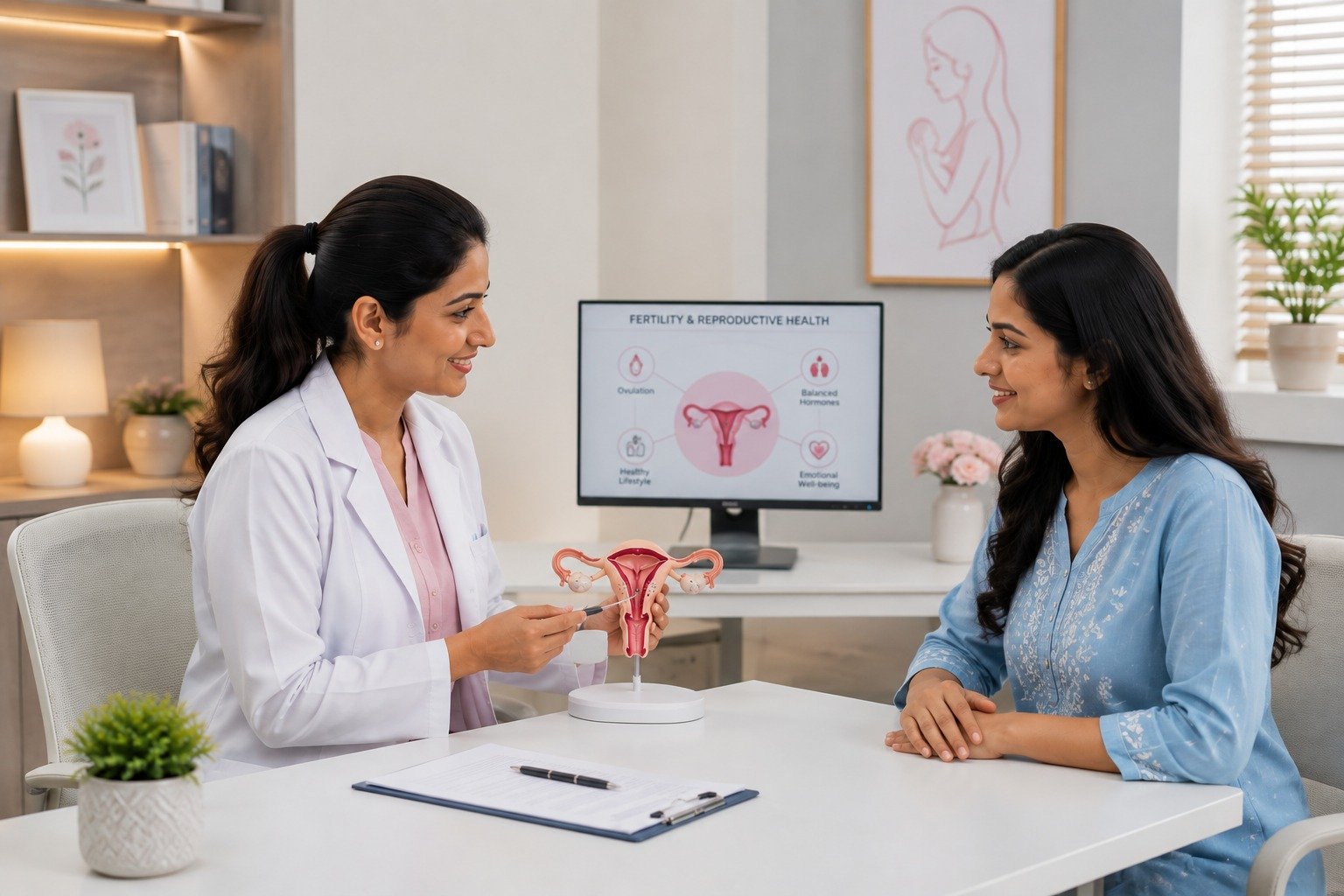
During a fertility consultation, Dr. Swati Jain discusses your reproductive history, symptoms, previous investigations and pregnancy goals.
Depending on your situation, the consultation may include:
Detailed medical and fertility history
Review of previous reports and treatments
Assessment of menstrual and ovulation patterns
Identification of possible fertility factors
Recommended investigations, if required
Discussion of treatment options
Fertility and pregnancy planning
The goal is to avoid unnecessary investigations or treatment and create a plan appropriate for your individual circumstances.
When Should You See a Fertility Specialist?
Consider seeking professional advice if you have persistent difficulty conceiving, irregular or absent periods, known PCOS, endometriosis, fibroids, ovarian conditions, previous pelvic surgery, recurrent pregnancy loss or other reproductive health concerns.
An earlier consultation may also be useful if you are concerned about age-related fertility changes or want to understand your fertility options before actively trying to conceive.
Why Choose Dr. Swati Jain for Infertility & Reproductive Health in Dwarka?
Dr. Swati Jain provides comprehensive gynaecological and reproductive health care with an individualised approach to fertility concerns.
Her fertility-focused care includes:
Detailed reproductive health assessment
Personalised infertility evaluation
PCOS and ovulation-related care
Endometriosis and fertility management
Fibroid and ovarian cyst assessment
Fertility-preserving surgical planning when appropriate
Preconception counselling
Recurrent pregnancy loss evaluation
Pregnancy planning and follow-up
Guidance based on individual fertility goals
The focus is on understanding the underlying concern and discussing appropriate treatment options rather than following a one-size-fits-all approach.
Infertility & Reproductive Health Care in Dwarka
If you are looking for an infertility doctor in Dwarka, fertility specialist in Dwarka or a female infertility specialist in Dwarka, Dr. Swati Jain offers personalised reproductive health consultations at Aakash Healthcare, Dwarka.
Whether you are trying to conceive, planning pregnancy, managing PCOS or endometriosis, or concerned about a reproductive health condition, an individual fertility assessment can help you understand the next steps.
Frequently Asked Questions
What is the first step in infertility treatment?
The first step is usually a detailed fertility consultation and medical history. Depending on your circumstances, your doctor may recommend specific investigations to identify possible causes.
Does PCOS cause infertility?
PCOS can affect ovulation and make conception more difficult for some women, but PCOS does not mean that pregnancy is impossible. Many women with PCOS conceive with appropriate management.
Can fibroids affect fertility?
Some fibroids can affect fertility, particularly depending on their location and relationship with the uterine cavity. However, many fibroids do not interfere with conception.
Can endometriosis affect fertility?
Endometriosis can be associated with fertility difficulties, particularly when it causes ovarian endometriomas, adhesions or changes in pelvic anatomy. Fertility planning should be individualised.
Do both partners need to be evaluated?
Depending on the situation, evaluation of both partners may be recommended because fertility difficulties can involve female, male or combined factors.
Is surgery always required for infertility?
No. Surgery is not required for every woman experiencing infertility. Treatment depends on the underlying cause, symptoms, fertility goals and investigation results.
Can I preserve my fertility while treating a gynaecological condition?
In selected situations, fertility-preserving treatment may be possible. The appropriate approach depends on the condition and individual reproductive goals.
When should I consult an infertility specialist?
You may consider a consultation if you have difficulty conceiving, irregular periods, PCOS, endometriosis, fibroids, ovarian conditions, previous pregnancy loss or other concerns affecting reproductive health.