
Service Overview
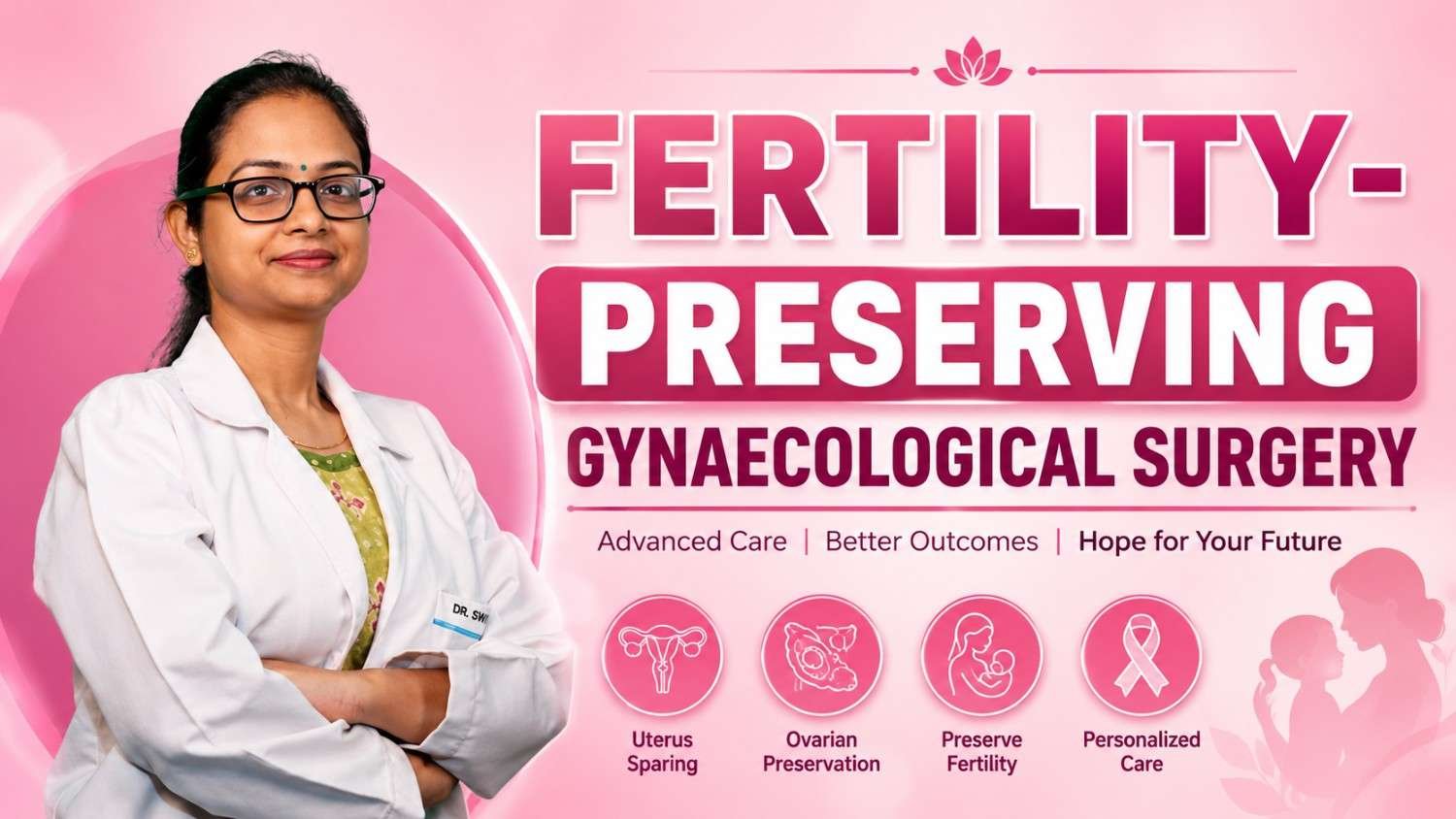
Fertility-Preserving Gynaecological Surgery in Dwarka
For many women, treating a gynaecological condition is not only about relieving symptoms. It is also about protecting future reproductive possibilities. Conditions such as uterine fibroids, ovarian cysts, endometriosis, endometriomas, and certain uterine or pelvic problems may require surgery, but the treatment approach can be planned with fertility considerations in mind.
Fertility-preserving gynaecological surgery focuses on treating a gynaecological condition while preserving the uterus, ovarian function, or other reproductive structures whenever medically appropriate.
Dr. Swati Jain provides personalised gynaecological evaluation and surgical care for women in Dwarka, with treatment planning based on the condition, symptoms, reproductive goals, age, medical history, and overall health.
What Is Fertility-Preserving Gynaecological Surgery?
Fertility-preserving surgery refers to surgical approaches designed to treat a gynaecological condition while retaining reproductive organs or healthy tissue whenever clinically possible.
The exact approach depends on the condition being treated.
Examples may include:
Myomectomy for selected uterine fibroids
Laparoscopic ovarian cyst surgery
Selected endometrioma surgery
Laparoscopic treatment of endometriosis
Hysteroscopic treatment of certain uterine conditions
Removal of selected uterine polyps
Treatment of pelvic adhesions
Other minimally invasive gynaecological procedures
Not every condition can or should be treated with fertility preservation. The safest and most appropriate treatment depends on individual circumstances.
Why Is Fertility Preservation Important?
Some gynaecological conditions can affect fertility directly, while certain surgical procedures may also influence reproductive function.
For women who wish to have children in the future, fertility goals should therefore be discussed before surgery.
Treatment planning may consider:
Whether pregnancy is desired in the future
Current reproductive plans
Ovarian reserve
Condition and size of fibroids or ovarian cysts
Presence and extent of endometriosis
Previous pelvic or abdominal surgeries
Condition of the fallopian tubes
Uterine health
Overall reproductive health
A fertility-preserving approach does not guarantee future pregnancy, but it can help ensure that treatment decisions take reproductive goals into consideration.
Conditions That May Require Fertility-Conscious Surgical Planning
Uterine Fibroids
Fibroids are non-cancerous growths that can develop in the uterus. Depending on their size and location, they may cause heavy periods, pelvic pressure, pain, or fertility-related concerns.
For selected women who wish to preserve the uterus, laparoscopic myomectomy may be considered instead of removing the uterus.
Ovarian Cysts
Many ovarian cysts do not require surgery. When surgery is necessary, the surgical plan may take ovarian tissue and future fertility into consideration.
Laparoscopic ovarian cyst surgery may be appropriate for selected patients.
Endometriosis and Endometriomas
Endometriosis can affect the ovaries, fallopian tubes, and other pelvic structures and may be associated with fertility difficulties.
When surgery is considered, careful planning is particularly important when ovarian tissue is involved because ovarian surgery can potentially affect ovarian reserve.
Uterine Polyps
Certain endometrial polyps may contribute to abnormal bleeding or fertility-related concerns. In appropriate cases, hysteroscopic surgery can allow treatment through the natural vaginal and cervical passage without an abdominal incision.
Pelvic Adhesions
Scar tissue inside the pelvis can sometimes affect the normal relationship between reproductive organs. In selected cases, laparoscopic surgery may be used to assess and treat adhesions.
Fertility-Preserving Laparoscopic Surgery
Laparoscopy is a minimally invasive surgical technique that uses a small camera and specialised instruments inserted through small abdominal incisions.
For selected gynaecological conditions, laparoscopic surgery can allow the surgeon to treat the problem while limiting the size of the surgical incisions.
Depending on the condition, laparoscopic procedures may be used for:
Fibroid removal
Ovarian cyst removal
Endometrioma treatment
Endometriosis surgery
Adhesion treatment
Selected other pelvic procedures
The suitability of laparoscopy depends on the individual condition and surgical requirements.
Fertility-Preserving Hysteroscopic Surgery
Hysteroscopy is a minimally invasive procedure used to examine and treat the inside of the uterus.
A thin camera is passed through the vagina and cervix into the uterine cavity. No abdominal incision is generally required.
Hysteroscopy may be used for selected conditions such as:
Endometrial polyps
Certain submucosal fibroids
Some uterine cavity abnormalities
Evaluation of abnormal uterine bleeding
Selected fertility-related uterine conditions
Whether hysteroscopic treatment is appropriate depends on the findings and the patient's individual circumstances.
Fertility-Preserving Fibroid Surgery
For women with symptomatic fibroids who wish to retain their uterus, myomectomy may be considered.
During a myomectomy, the fibroids are removed while the uterus is retained.
The surgical approach can vary depending on:
Number of fibroids
Size of fibroids
Location within the uterus
Symptoms
Previous surgeries
Reproductive plans
Laparoscopic myomectomy may be suitable for selected patients, while other cases may require a different surgical approach.
Fertility Considerations in Ovarian Surgery
The ovaries play an important role in reproductive health. Therefore, ovarian surgery requires careful consideration, particularly in women planning pregnancy.
When an ovarian cyst or endometrioma requires surgery, treatment planning may consider:
Ovarian reserve
Cyst size and characteristics
Whether one or both ovaries are affected
Previous ovarian surgery
Age
Fertility history
Future pregnancy plans
The objective is to treat the underlying condition while preserving healthy ovarian tissue whenever clinically appropriate.
Fertility and Endometriosis Surgery
Endometriosis can affect fertility through inflammation, adhesions, ovarian involvement, or changes in pelvic anatomy.
Surgery may be considered in selected women with significant symptoms, endometriomas, adhesions, or other surgically treatable disease.
However, ovarian endometriosis surgery requires particular care because removing an endometrioma can potentially affect ovarian reserve.
A fertility-conscious treatment plan should therefore balance the potential benefits of surgery against possible effects on ovarian function.
What to Expect During Your Consultation
1. Understand Your Concerns
Dr. Swati Jain discusses your symptoms, menstrual history, previous treatment, medical history, and reproductive plans.
2. Review Investigations
Depending on your condition, ultrasound, blood tests, or other investigations may be recommended.
3. Assess Reproductive Factors
Where relevant, factors affecting fertility and reproductive health are considered as part of treatment planning.
4. Discuss Treatment Options
You may be advised about medical management, observation, minimally invasive surgery, or other appropriate options.
5. Create an Individualised Surgical Plan
If surgery is required, the approach is selected based on the condition and your individual reproductive goals.
6. Follow-Up and Future Planning
Postoperative follow-up helps monitor recovery and provides guidance regarding future pregnancy planning when appropriate.
Benefits of a Fertility-Conscious Surgical Approach
When clinically suitable, fertility-preserving surgery may offer several potential benefits:
Treatment of the underlying gynaecological condition
Preservation of the uterus in selected procedures
Preservation of healthy ovarian tissue when possible
Minimally invasive options for suitable conditions
Consideration of future pregnancy plans
Individualised treatment decisions
Appropriate postoperative and reproductive follow-up
Fertility preservation is not suitable for every patient or every condition. The treatment approach should always prioritise the patient's overall health and safety.
Fertility Preservation Does Not Always Mean Avoiding Surgery
Women sometimes worry that surgery itself will automatically affect fertility. However, avoiding necessary treatment is not always the best option.
Certain untreated conditions can also affect reproductive health.
For example, some fibroids, endometriosis, ovarian conditions, or uterine abnormalities may require treatment based on their symptoms or clinical characteristics.
The goal is to determine whether surgery is necessary and, if it is, select an approach that appropriately considers reproductive goals.
Why Choose Dr. Swati Jain?
Dr. Swati Jain is an experienced Obstetrician and Gynaecologist providing comprehensive women's healthcare in Dwarka.
Her approach to fertility-conscious gynaecological surgery includes:
Detailed evaluation before recommending surgery
Understanding individual reproductive goals
Careful assessment of the uterus and ovaries
Minimally invasive surgical options when appropriate
Individualised treatment planning
Discussion of potential benefits and risks
Postoperative follow-up
Guidance regarding future reproductive planning
With more than 11 years of clinical experience in women's healthcare, Dr. Swati Jain focuses on personalised care that considers both the immediate condition and the patient's longer-term reproductive goals.
Fertility-Preserving Gynaecological Surgery in Dwarka
A diagnosis of fibroids, ovarian cysts, endometriosis, or another gynaecological condition does not automatically mean that fertility will be affected.
The right approach depends on the condition, its severity, your age, reproductive goals, ovarian and uterine health, and other individual factors.
If surgery is recommended, a fertility-conscious approach can help ensure that reproductive considerations are part of the treatment discussion.
Dr. Swati Jain provides personalised fertility-preserving gynaecological surgery in Dwarka, including minimally invasive surgical options for selected conditions.
Frequently Asked Questions
1. What is fertility-preserving surgery?
Fertility-preserving surgery aims to treat a gynaecological condition while retaining the uterus, ovarian function, or other reproductive structures whenever medically appropriate.
2. Can fibroids be removed without removing the uterus?
Yes. In selected women, a myomectomy can remove fibroids while preserving the uterus. The appropriate surgical approach depends on the number, size, and location of the fibroids.
3. Can ovarian cyst surgery preserve fertility?
In selected cases, the cyst can be removed while preserving healthy ovarian tissue. However, ovarian surgery can have an impact on ovarian reserve, so the benefits and risks should be carefully discussed.
4. Is laparoscopic surgery better for fertility?
Laparoscopy can be an appropriate minimally invasive approach for selected conditions, but it is not automatically the best option for every patient. The surgical approach depends on the condition and individual circumstances.
5. Can endometriosis surgery affect ovarian reserve?
Yes. Surgery involving an ovarian endometrioma can potentially affect ovarian reserve. This is an important consideration when deciding whether and how surgery should be performed.
6. Can hysteroscopy be used for fertility-related conditions?
Yes. Hysteroscopy can be used to diagnose and treat selected abnormalities inside the uterine cavity, including certain polyps and submucosal fibroids.
7. Does fertility-preserving surgery guarantee pregnancy?
No. Preserving reproductive organs does not guarantee future pregnancy. Fertility depends on multiple factors involving the ovaries, fallopian tubes, uterus, sperm factors, age, and overall reproductive health.
8. When should I discuss fertility before gynaecological surgery?
If you may want to become pregnant in the future, discuss your reproductive goals with your gynaecologist before surgery. This can help guide investigation and treatment planning.
Plan Your Treatment With Your Future in Mind
Gynaecological surgery should address the present medical concern while considering what matters to you in the future.
If you have been diagnosed with fibroids, ovarian cysts, endometriosis, endometrioma, or another condition that may require surgery, consult Dr. Swati Jain for a personalised evaluation and treatment plan in Dwarka.