
Service Overview
Hysteroscopic (Scarless Uterine) Procedures in Dwarka
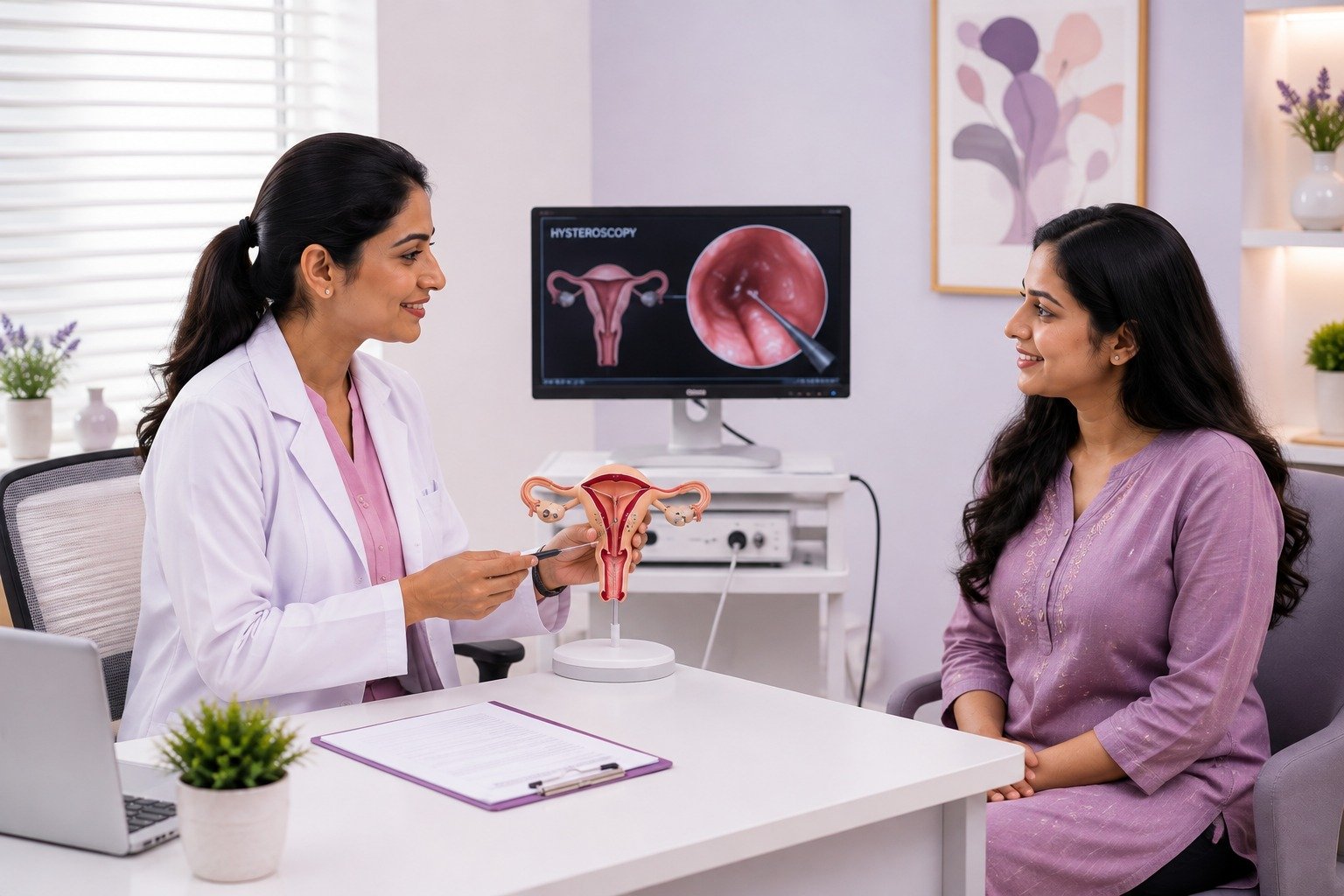
Hysteroscopy is a minimally invasive gynaecological procedure used to examine and, when required, treat conditions inside the uterus. A thin camera called a hysteroscope is passed through the vagina and cervix into the uterine cavity, allowing the doctor to directly visualise the inside of the uterus.
Because hysteroscopy does not usually require an abdominal incision, it is sometimes described as a scarless uterine procedure.
Dr. Swati Jain provides personalised hysteroscopic procedures in Dwarka for women with conditions such as uterine polyps, selected submucosal fibroids, uterine adhesions and certain abnormal bleeding or fertility-related concerns.
What Is Hysteroscopy?
Hysteroscopy is a procedure that allows the inside of the uterus to be examined using a thin, lighted telescope called a hysteroscope.
The hysteroscope is introduced through the vagina and cervix, so an abdominal incision is generally not required.
Hysteroscopy can be used for:
Diagnosis of abnormalities inside the uterus
Evaluation of abnormal uterine bleeding
Assessment of some fertility-related uterine problems
Removal of uterine polyps
Treatment of selected submucosal fibroids
Treatment of some uterine adhesions
Removal of certain retained tissue
Evaluation of abnormalities seen on ultrasound or other imaging
The exact procedure depends on the condition being evaluated or treated.
Why Is Hysteroscopy Called a Scarless Uterine Procedure?
Unlike abdominal laparoscopic or open surgery, hysteroscopy accesses the uterus through the natural vaginal and cervical passage.
There is generally:
No abdominal incision
No external surgical scar
Direct visualisation of the uterine cavity
Minimally invasive access to selected uterine conditions
However, the term “scarless” refers specifically to the absence of an external abdominal surgical scar. Hysteroscopy is still a medical procedure and can have risks and recovery requirements.
Diagnostic Hysteroscopy
Diagnostic hysteroscopy is performed to look inside the uterine cavity and identify abnormalities.
It may be recommended when there are concerns such as:
Abnormal or heavy menstrual bleeding
Bleeding between periods
Recurrent pregnancy loss in selected cases
Difficulty conceiving
Suspected uterine polyps
Suspected submucosal fibroids
Abnormal ultrasound findings
Suspected uterine adhesions
Certain postmenopausal bleeding concerns
During the procedure, the doctor can directly examine the uterine lining and cavity.
Operative Hysteroscopy
When a problem is identified inside the uterus, certain conditions can be treated during an operative hysteroscopy.
Possible procedures include:
Hysteroscopic polyp removal
Removal of selected submucosal fibroids
Division of certain intrauterine adhesions
Removal of selected retained tissue
Treatment of other suitable abnormalities within the uterine cavity
The type of treatment depends on the size, location and nature of the abnormality.
Conditions Treated With Hysteroscopy
Uterine Polyps
Endometrial polyps are growths arising from the lining of the uterus. They can sometimes cause irregular bleeding, heavy periods or fertility-related concerns.
Hysteroscopic polypectomy allows the polyp to be directly visualised and removed.
Submucosal Fibroids
Some fibroids grow towards the inside of the uterine cavity. These are known as submucosal fibroids.
Selected submucosal fibroids may be suitable for hysteroscopic removal depending on their size, location and depth within the uterine wall.
Intrauterine Adhesions
Intrauterine adhesions are bands of scar tissue that can develop inside the uterus, sometimes following procedures or inflammation.
Hysteroscopy can allow suitable adhesions to be directly visualised and treated.
Retained Tissue
In selected circumstances, hysteroscopy may be used to identify and remove retained tissue within the uterine cavity.
The appropriate treatment depends on the underlying cause and clinical findings.
Hysteroscopy for Abnormal Uterine Bleeding
Abnormal uterine bleeding can have several causes, including hormonal changes, fibroids, polyps, adenomyosis and other uterine conditions.
When an abnormality within the uterine cavity is suspected, hysteroscopy may help provide a more direct assessment.
Depending on the findings, treatment may sometimes be performed during the same procedure.
Hysteroscopy and Fertility
Certain abnormalities inside the uterine cavity can affect fertility or pregnancy outcomes.
Hysteroscopy may be considered when there is a suspected:
Endometrial polyp
Submucosal fibroid
Intrauterine adhesion
Uterine cavity abnormality
Treating a specific uterine abnormality may be beneficial in selected women, but hysteroscopy is not required for every woman experiencing infertility or miscarriage.
The decision should be based on individual history, examination and appropriate investigations.
Hysteroscopy for Recurrent Pregnancy Loss
Some women with recurrent pregnancy loss may require evaluation of the uterine cavity.
Depending on the clinical situation, investigations may include ultrasound, saline infusion sonography, hysteroscopy or other imaging.
Hysteroscopy can directly identify certain cavity abnormalities such as polyps, adhesions or selected fibroids.
Not every case of recurrent pregnancy loss is caused by a uterine abnormality, so a complete evaluation is important.
How Is Hysteroscopy Performed?
The exact technique depends on whether the procedure is diagnostic or operative.
Generally:
The patient is positioned appropriately.
The vagina and cervix are prepared.
A thin hysteroscope is introduced through the vagina and cervix.
A suitable fluid is used to gently expand the uterine cavity.
The doctor examines the uterine lining and cavity.
If required, specialised instruments are used to treat the identified abnormality.
The hysteroscope is removed after completion of the procedure.
The procedure may be performed using local anaesthesia, sedation or general/regional anaesthesia depending on the procedure, patient preference, medical circumstances and hospital protocol.
Hysteroscopy vs Laparoscopy
Hysteroscopy and laparoscopy are both minimally invasive procedures, but they examine different areas.
Sometimes both procedures may be recommended when problems are suspected both inside and outside the uterus.
Benefits of Hysteroscopic Procedures
When hysteroscopy is appropriate, potential benefits may include:
No abdominal incision in most cases
Direct visualisation of the uterine cavity
Treatment of selected conditions during the same procedure
Minimal external scarring
Generally shorter recovery than many abdominal procedures
Useful for selected fertility-related uterine abnormalities
Precise treatment of problems located inside the uterine cavity
The benefits depend on the condition being treated and the individual patient's circumstances.
Is Hysteroscopy Safe?
Hysteroscopy is commonly performed and is generally considered a safe minimally invasive procedure when appropriately indicated.
However, like any medical procedure, it can have potential risks.
Possible complications include:
Bleeding
Infection
Uterine perforation
Fluid-related complications
Cervical injury
Incomplete removal of a lesion
Formation or recurrence of adhesions in some circumstances
Anaesthesia-related complications
Your doctor will discuss the relevant risks based on the specific procedure planned.
Preparation Before Hysteroscopy
Before the procedure, your doctor may review:
Medical history
Menstrual history
Previous pregnancies
Previous uterine procedures
Current medicines
Previous imaging or test reports
Pregnancy status where relevant
Depending on the procedure, you may be advised regarding:
Timing of the procedure within the menstrual cycle
Fasting requirements
Medication adjustments
Blood tests or other investigations
Anaesthesia assessment
Arrangements for returning home after the procedure
Follow the specific instructions provided by your medical and anaesthesia team.
Recovery After Hysteroscopy
Recovery depends on whether the procedure was diagnostic or operative and on the type of treatment performed.
Some women may experience:
Mild abdominal cramps
Light vaginal bleeding or spotting
Tiredness
Mild pelvic discomfort
Your doctor will advise you about returning to normal activities, exercise, sexual activity and work.
Recovery is generally shorter than that associated with many major abdominal gynaecological surgeries, but the exact recovery period varies.
When Should You Seek Medical Advice After Hysteroscopy?
Contact your doctor if you experience:
Heavy vaginal bleeding
Severe or worsening abdominal pain
Fever
Foul-smelling vaginal discharge
Dizziness or fainting
Persistent vomiting
Feeling seriously unwell
These symptoms may require medical assessment.
Hysteroscopy and Future Pregnancy
For women who are planning pregnancy, hysteroscopy may be useful when a specific uterine cavity abnormality is suspected.
Treatment of conditions such as selected polyps, submucosal fibroids or adhesions may help restore the uterine cavity in appropriate cases.
However, the impact on fertility depends on the underlying condition and other fertility factors. Hysteroscopy should therefore be recommended based on individual clinical assessment rather than as a routine procedure for everyone.
Why Choose Dr. Swati Jain for Hysteroscopic Procedures in Dwarka?
Dr. Swati Jain provides personalised gynaecological care for women with uterine and reproductive health concerns.
Her hysteroscopic care may include:
Evaluation of abnormal uterine bleeding
Assessment of uterine cavity abnormalities
Hysteroscopic polyp removal
Treatment of selected submucosal fibroids
Management of selected intrauterine adhesions
Fertility-focused uterine evaluation
Individualised treatment planning
Post-procedure follow-up
The recommended procedure depends on the location, size and nature of the uterine abnormality.
Hysteroscopic Procedures in Dwarka
If you are looking for hysteroscopy in Dwarka, Dr. Swati Jain provides diagnostic and operative hysteroscopic care for selected uterine conditions.
Hysteroscopy can offer direct visualisation and treatment of abnormalities inside the uterus without the need for an external abdominal incision in most cases.
A detailed consultation and appropriate investigations can help determine whether hysteroscopy is suitable for you.
Frequently Asked Questions
What is hysteroscopy?
Hysteroscopy is a minimally invasive procedure used to examine the inside of the uterus using a thin camera called a hysteroscope.
Is hysteroscopy really scarless?
Hysteroscopy usually does not require an abdominal incision, so there is generally no external abdominal surgical scar. However, it is still a medical procedure with potential risks and recovery requirements.
What conditions can be treated with hysteroscopy?
Selected uterine polyps, submucosal fibroids, intrauterine adhesions and certain other abnormalities within the uterine cavity can be treated using hysteroscopy.
Can hysteroscopy help with infertility?
Hysteroscopy may be useful when a specific uterine cavity abnormality is suspected, such as a polyp, submucosal fibroid or adhesion. It is not necessary for every woman with infertility.
Can hysteroscopy remove fibroids?
Selected submucosal fibroids can sometimes be removed through hysteroscopic surgery. Suitability depends on the fibroid's size, location and depth within the uterine wall.
Is hysteroscopy painful?
The level of discomfort depends on the type of hysteroscopy and the anaesthesia or pain-relief method used. Your doctor can discuss the most appropriate option for your procedure.
How long does it take to recover from hysteroscopy?
Recovery varies according to whether the procedure was diagnostic or operative and what treatment was performed. Many women recover more quickly than after major abdominal surgery.
Can I become pregnant after hysteroscopy?
Many women can become pregnant after appropriate hysteroscopic treatment. Your doctor can advise you about pregnancy planning based on the condition treated and your individual fertility situation.
What is the difference between hysteroscopy and laparoscopy?
Hysteroscopy examines the inside of the uterus through the vagina and cervix. Laparoscopy uses small abdominal incisions to examine and treat conditions within the pelvis and abdomen.
Does every uterine polyp require hysteroscopy?
Not necessarily. Management depends on factors such as the size and location of the polyp, symptoms, age, fertility plans and other clinical findings.